A British Aviation House · Est. 1912
A century of flight, written in a single name.
Scroll
This is, first, a heritage. A documented century of engineering, adventure and romance, preserved and told in full. What may one day be worn or collected is simply the natural inheritance of a story worth keeping alive.
A British aviation house, held by a single custodian and opened, carefully, to makers.
The name is registered, unencumbered and never previously licensed. We are selective about who carries it and relaxed about what they make with it — the checks are on the marque, the aircraft and the history, never on your design.
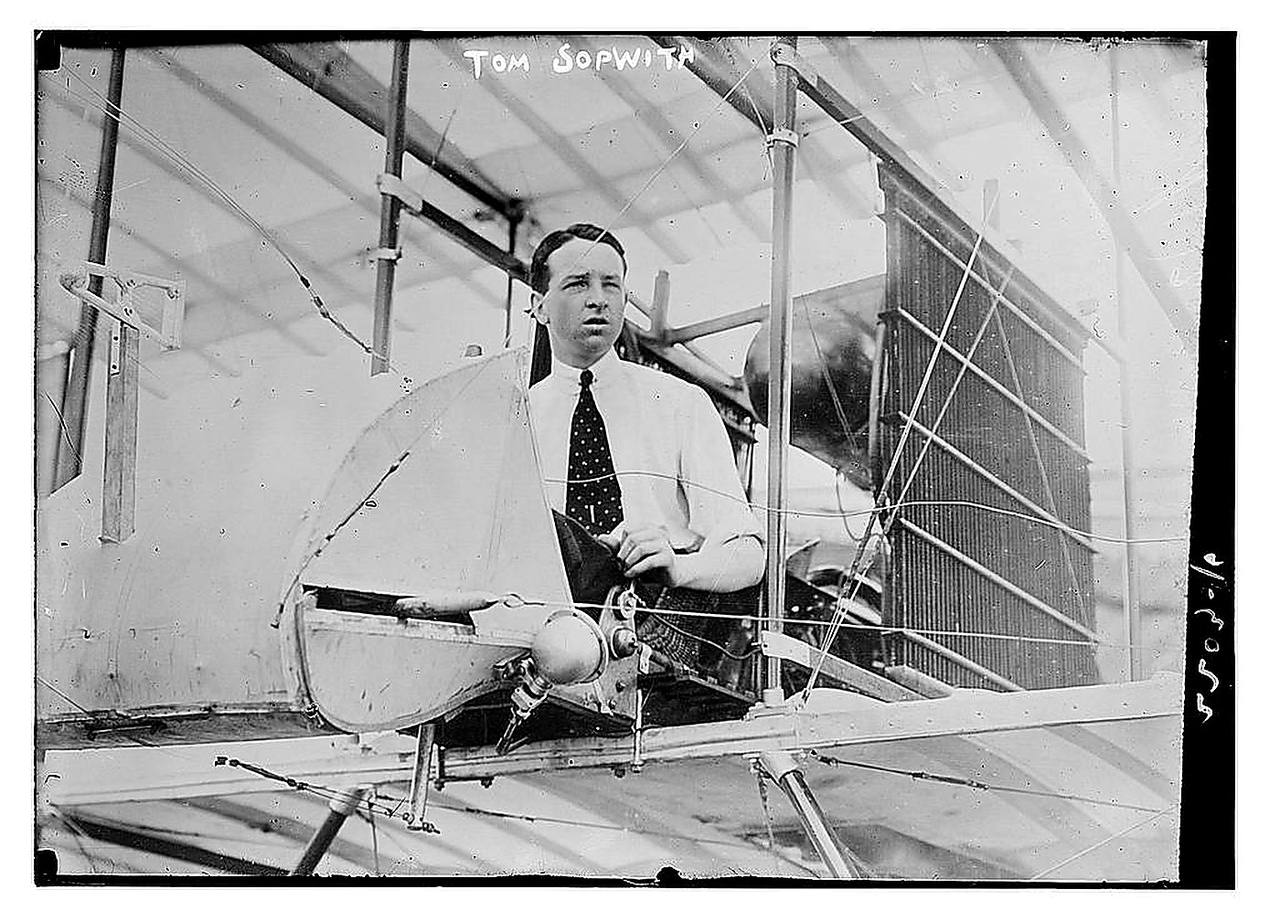
In the autumn of 1910, on the grass at Brooklands, a young man with no instruction and no precedent climbed into a flimsy machine of wood, wire and canvas and tried to fly. He crashed within yards. He climbed out, studied what had gone wrong, and went again.
This was aviation in its infancy, an age of amateurs and dreamers when flight itself was barely seven years old. Within weeks Thomas Sopwith held a national distance record. Within months he had won a great prize for the longest flight from England to the Continent. Within two years, still only twenty-four, he had founded the aircraft company that would carry his name into history.
It carries it still.
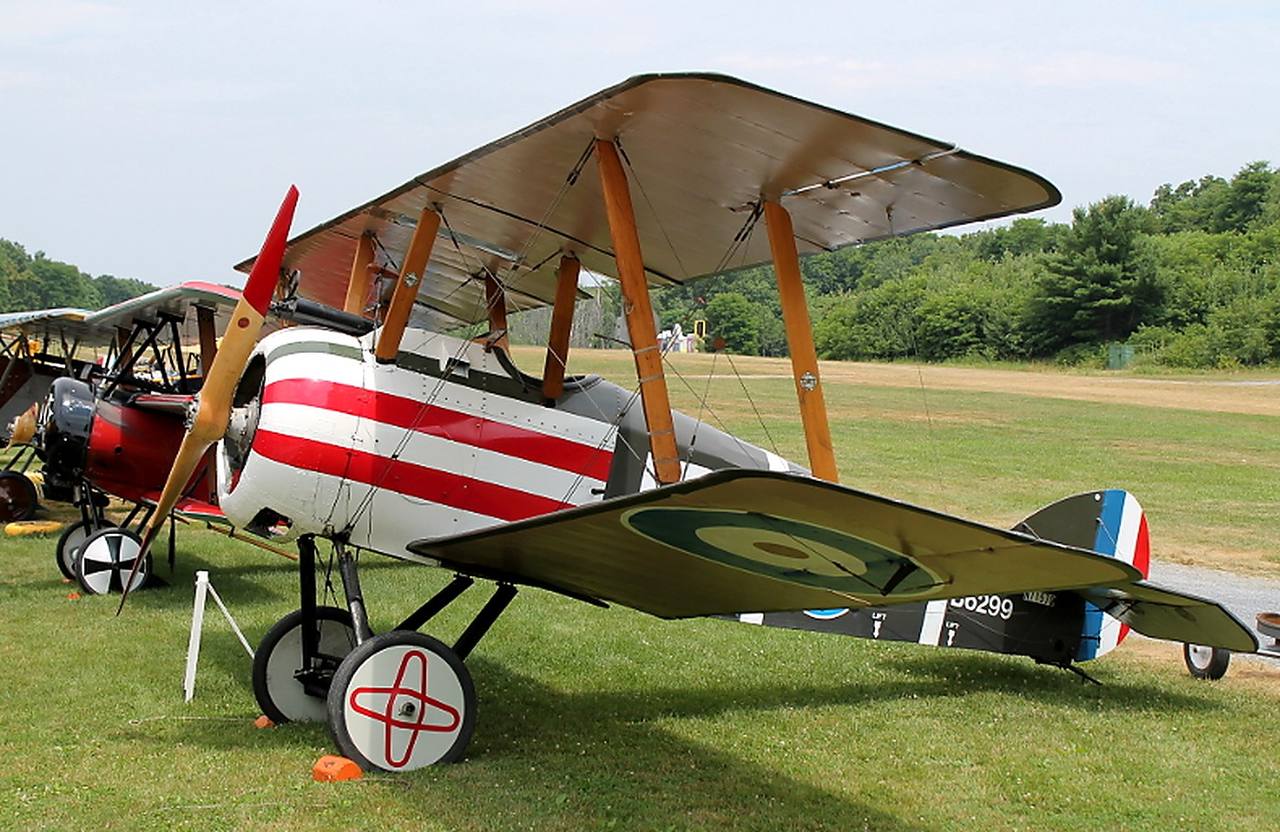
The Sopwith Camel is one of the most recognised aircraft ever built, the very picture of aviation's daring youth. Quick, alive, exhilarating to fly, it asked everything of those who took it up and rewarded them with a freedom no generation before had ever known.
It belongs to a remarkable family, the Pup, the Triplane, the Snipe, each a leap forward in the young art of flight. Hand-built in Kingston by craftsmen who were, quite literally, inventing the flying machine as they went.
More than a century on, its silhouette is known the world over.
"His life began before the first aeroplane flew, and ended in the age of the jump jet."Sir Thomas Sopwith · 1888–1989 · A life of one hundred and one years
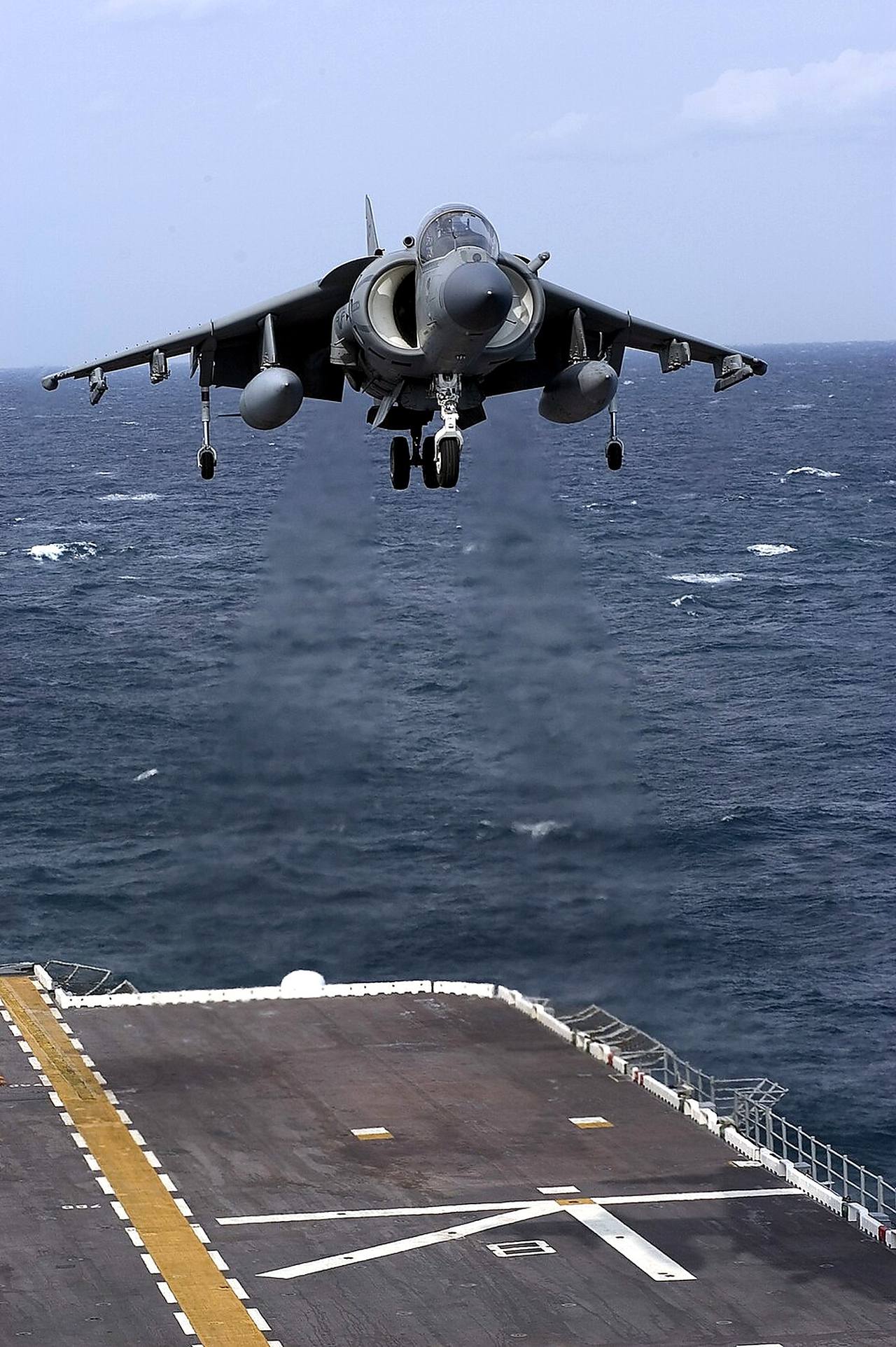
The thread of engineering that began in a Kingston workshop in 1912 ran, unbroken, for the rest of the century. Through the company that became Hawker, through the legendary Hurricane, and on to the Harrier, the first aircraft in the world to rise vertically into the sky as if by magic.
One continuous pursuit of the new, from canvas and wire to the jet age, all of it tracing back to a single name and a single founder who lived to see almost all of it.
Few names in British engineering carry a pedigree of this depth.
When Thomas Sopwith founded his company in 1912, powered flight was younger than the children who would grow up worshipping it. The Wright brothers had left the ground for the first time only nine years earlier. To build flying machines in such an age was not industry as we know it. It was closer to alchemy, conducted in sheds and former skating rinks by a handful of obsessive young men who taught themselves as they went.
Sopwith's works at Kingston-upon-Thames became one of the great cradles of this new art. There, alongside his brilliant test pilot Harry Hawker and a small band of engineers and craftsmen, Sopwith produced a succession of aircraft that advanced the science of flight at breathtaking speed. Each machine was drawn, shaped and stitched by hand. Wood was carved, wire was tensioned, fabric was doped and stretched over frames as light as they dared make them. These were objects of craft as much as engineering, beautiful in the way that only purposeful things can be.
By the close of the decade the Sopwith name was known across the world. Tens of thousands of aircraft bearing his designs had been built, in Kingston and under licence across Britain. The Camel, the Pup, the Triplane and the Snipe had passed into legend, and the young man who had taught himself to fly on the grass at Brooklands had become one of the most significant figures in the history of aviation.
And yet his story was only beginning. When the original company closed in 1920, Sopwith and Hawker immediately built another, and from it grew Hawker Aircraft and a lineage of engineering that would shape British flight for the rest of the century, through the Hurricane and onward to the Harrier, the first aircraft in the world able to rise vertically into the air. The thread never broke. It ran, unbroken, from a hand-built biplane in 1912 to the jet age, and the man whose name began it lived to see almost all of it, dying in 1989 at the age of one hundred and one.
One of Britain's greatest founders.
Few individuals shaped British aviation more profoundly than Sir Thomas Octave Murdoch Sopwith.
Born during the Victorian era and living to the remarkable age of one hundred and one, his life spanned almost the entire history of powered flight.
In 1912, aged just twenty-four, he founded the Sopwith Aviation Company. At a time when powered flight remained an extraordinary experiment, Sir Thomas believed Britain could become a world leader in aviation.
That belief helped shape an industry.
Sir Thomas was never defined solely by aircraft.
Reserved. Thoughtful. Curious. Quietly ambitious. He believed reputation was earned, that craftsmanship mattered, and that quality endured.
These principles became the character of the company he founded.
“…he showed us his latest machine which is a wonder…”King George V
During a royal visit to the Sopwith works and the Brooklands flying ground, King George V witnessed demonstrations of Sopwith's latest aircraft, recording in his diary his admiration for what he described simply as “a wonder.” The pilot was an Australian test pilot, believed by many historians to have been Harry Hawker, Sopwith's legendary chief test pilot and future co-founder of Hawker Engineering.
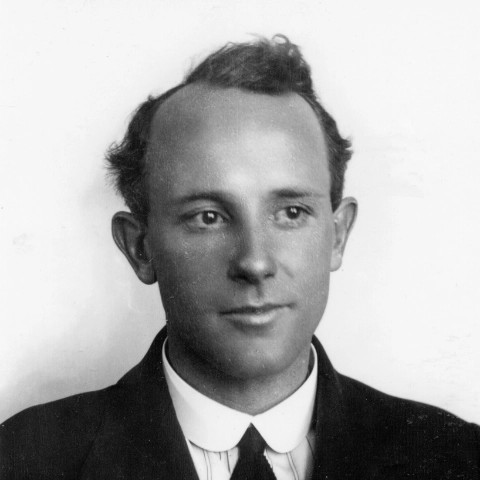
Born in Melbourne and largely self-taught, Harry Hawker arrived in England in 1911 with little more than nerve and a gift for machinery. He became Sopwith's chief test pilot and closest collaborator — the man who first flew almost every aircraft the company built, and who shaped them from the cockpit as much as the drawing office did from the bench.
When the Sopwith Aviation Company closed in 1920, it was his name that carried the story forward: H.G. Hawker Engineering, the firm that would become Hawker Aircraft and, in time, produce the Hurricane and the Harrier.
In 1934, Sir Thomas challenged for the America’s Cup on behalf of the Royal Yacht Squadron. His yacht was Endeavour — a J‑class designed by Charles E. Nicholson and built at Camper & Nicholsons in Gosport. Many still call her the most beautiful racing yacht ever built in Britain.
He approached her exactly as he had approached an aeroplane. Endeavour carried a quadrilateral genoa, strain gauges on her running backstays and electric wind instruments — an aircraft manufacturer’s thinking, brought to the sea.
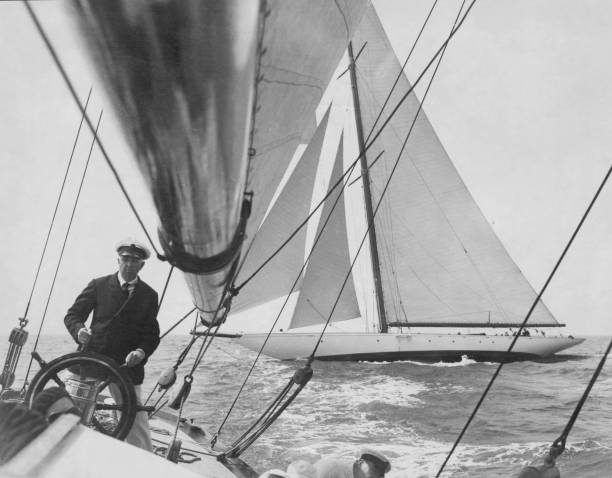
Eight days before she sailed for America, most of her professional crew struck for higher pay. Sopwith refused the ultimatum and crossed the Atlantic with amateurs — club sailors from the Royal Corinthian, alongside the few professionals who stayed.
Against that, Endeavour won the first two races off Newport, the second in record time with Sir Thomas himself at the helm. Then Rainbow took four straight, and the Cup stayed in America. It was the closest a British challenger has ever come — and the series was contentious enough to earn a headline that has outlived everyone involved:
He tried once more in 1937 with Endeavour II, and fell to Ranger. He called the near miss of 1934 the greatest regret of his life — a remarkable verdict from a man who had already given Britain an aircraft industry.
Endeavour still sails today.
Many assume the Sopwith story ended after the First World War. In reality, it was only just beginning.
Following the closure of the Sopwith Aviation Company in 1920, Sir Thomas became one of the founders of H.G. Hawker Engineering. He did not simply observe the next chapter of British aviation. He helped create it.
Remaining closely involved for decades as Chairman and later President, he provided continuity as the company evolved into Hawker Aircraft and later Hawker Siddeley. Through that extraordinary lineage came some of Britain's greatest aircraft.
Sir Thomas lived long enough not merely to witness the Harrier. He had helped build the company that created it: one uninterrupted engineering legacy.
The connection between Sopwith and the motorcycle world began not after the war but before it. As early as 1912, Sopwith aircraft were flying ABC engines at Brooklands, and when Harry Hawker won the Michelin Endurance Prize that year, it was a Sopwith machine with an ABC powerplant that carried him to victory. The two houses were linked from the beginning.
When the Armistice came in November 1918, the Kingston works faced a crisis familiar to every great engineering concern of the age. Military contracts vanished overnight. The factory that had built eighteen thousand aircraft during the war still employed three and a half thousand men, and there was nothing to build. The answer came from an old ally. In December 1918, ABC Motors transferred to Sopwith all rights to manufacture and sell its motorcycles, and the Kingston factory was retooled accordingly: a hundred thousand pounds invested in new machinery, the assembly lines reconfigured, the craftsmen who had doped canvas and rigged wire now turned to steel frames and flat-twin engines.
The motorcycle they produced was extraordinary. Designed by Granville Bradshaw, a genius of compact engineering whose post-war reputation was considerable, the Sopwith-ABC was unlike anything else on British roads. Its 398cc flat-twin engine sat transversely in the frame, its horizontally opposed cylinders cooled by air, its overhead valves operated by push rods from a single camshaft. The engine and four-speed gearbox were built as a single integrated unit, years before such thinking became standard. Bradshaw's legend was that he had designed the entire engine in under three weeks. Considering what he produced, it is not difficult to believe.
The chassis was no less advanced. Front and rear suspension at a time when most British motorcycles offered neither: quarter-elliptic leaf springs at each end, similar in principle to the springing found on luxury motor cars of the period. A duplex cradle frame for rigidity. Leg shields and footboards integrated into the structure, giving the rider protection from weather and road debris that competitors simply did not attempt. At the 1919 Motor Cycle Show, where Sopwith and ABC exhibited jointly, the machine stopped people in their tracks. Orders flooded in, more than the factory could hope to fulfil.
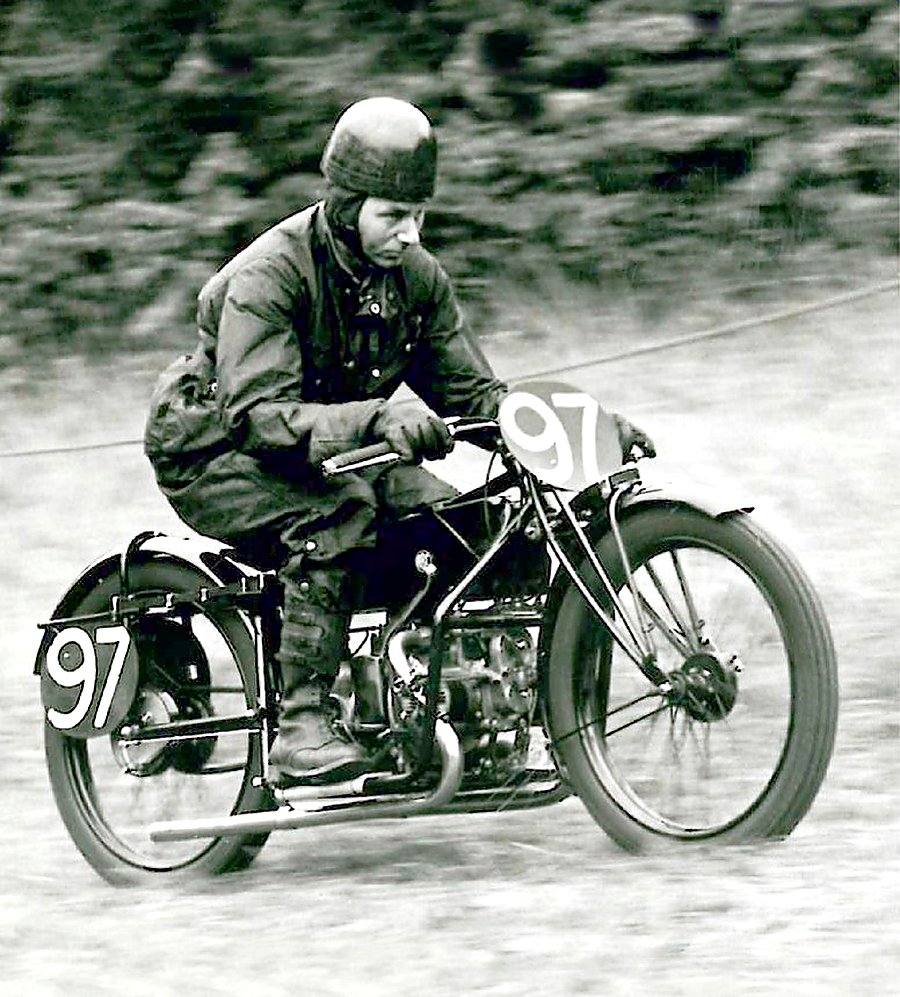
Two Sopwith-ABCs entered the Isle of Man Senior TT in 1920. At Brooklands, where the Sopwith story had begun a decade earlier, the machine broke the one-hour record, its rider exceeding eighty miles an hour on the banking to average 70.44 mph over the distance. For a motorcycle that had not existed eighteen months before, it was a remarkable achievement.
And yet the machine was never quite ready. The valve gear proved unreliable in service. Lubrication, sound in theory, was problematic in practice. Customers who had waited months for delivery found themselves with warranty claims that multiplied faster than the factory could address them. Bradshaw, characteristically, later absolved himself of all blame and attributed the failures to Sopwith's manufacturing. Sopwith, equally characteristically, had already moved on. By September 1920 the Kingston works closed, the company entered voluntary liquidation, and the man who had taught himself to fly at Brooklands at twenty-two simply began again, founding Hawker Aircraft, which would go on to build the Hurricane and, through its descendants, the Harrier.
The Sopwith-ABC survives today in museum collections in Britain and Australia, recognised by those who know it as one of the most technically ambitious motorcycles of the early twentieth century. A derivation of the design, built under licence by Gnome et Rhône in France, ran rather more successfully until 1924. BMW adapted a similar transverse flat-twin layout years later, and when Bradshaw challenged the patent in 1926, the argument had already been made in steel on the roads of post-war Britain, by machines that said Sopwith on the tank.
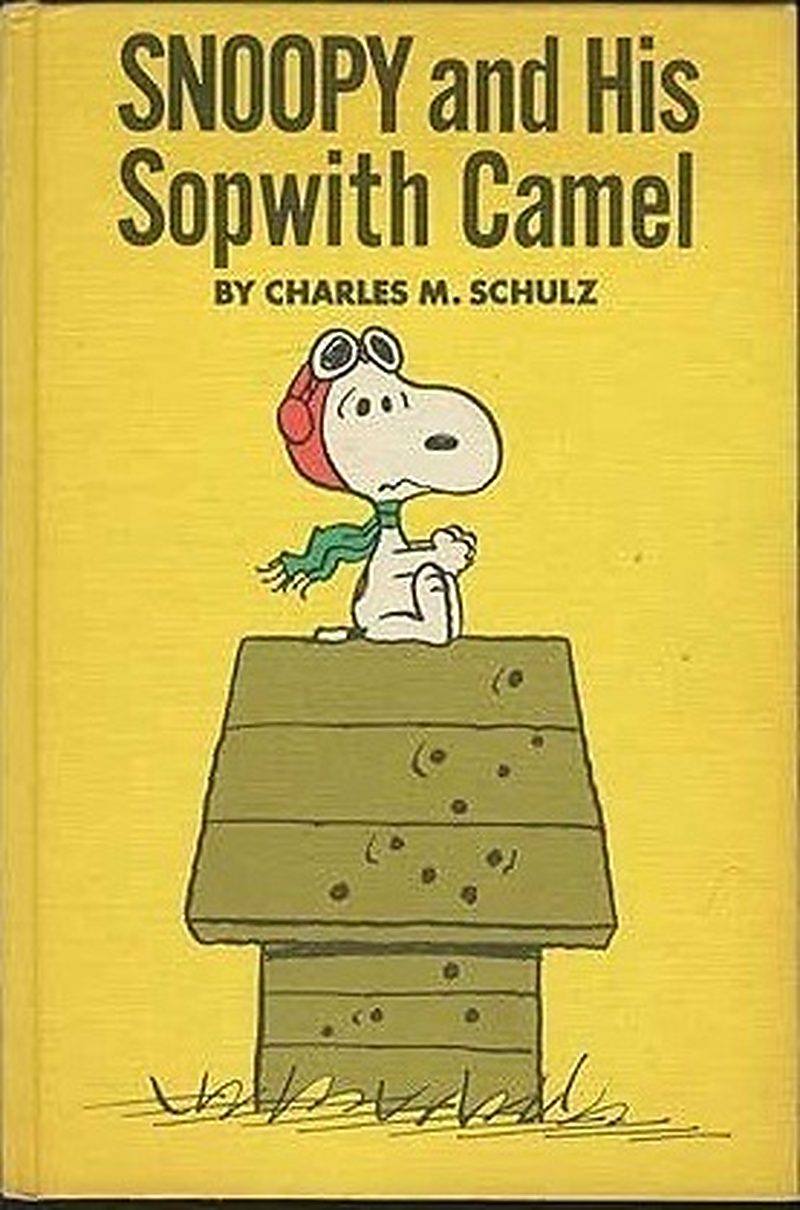
Few aircraft have ever crossed from the history books into the world's imagination. The Sopwith Camel did it twice, carried there by a beagle on a doghouse and by Britain's most famous fictional airman.
In October 1965, Charles M. Schulz drew Snoopy climbing onto the roof of his doghouse wearing a leather flying helmet, goggles and a scarf. In his imagination the doghouse became a Sopwith Camel, and Snoopy became the Flying Ace, forever duelling his unseen nemesis, the Red Baron, above the fields of France.
Schulz, himself a veteran, returned to the Flying Ace for decades. The persona became one of the most beloved running storylines in the history of comics, appearing in animated specials, inspiring the 1966 hit song "Snoopy vs. the Red Baron" and even NASA tradition, where the Apollo 10 lunar module was named Snoopy. For generations of readers around the world, their very first encounter with the name "Sopwith Camel" came not from a history book but from a small white beagle with his scarf streaming in an imaginary wind.
It remains perhaps the greatest tribute ever paid to a single aircraft: that half a century after the last Camel flew, children on every continent knew its name.
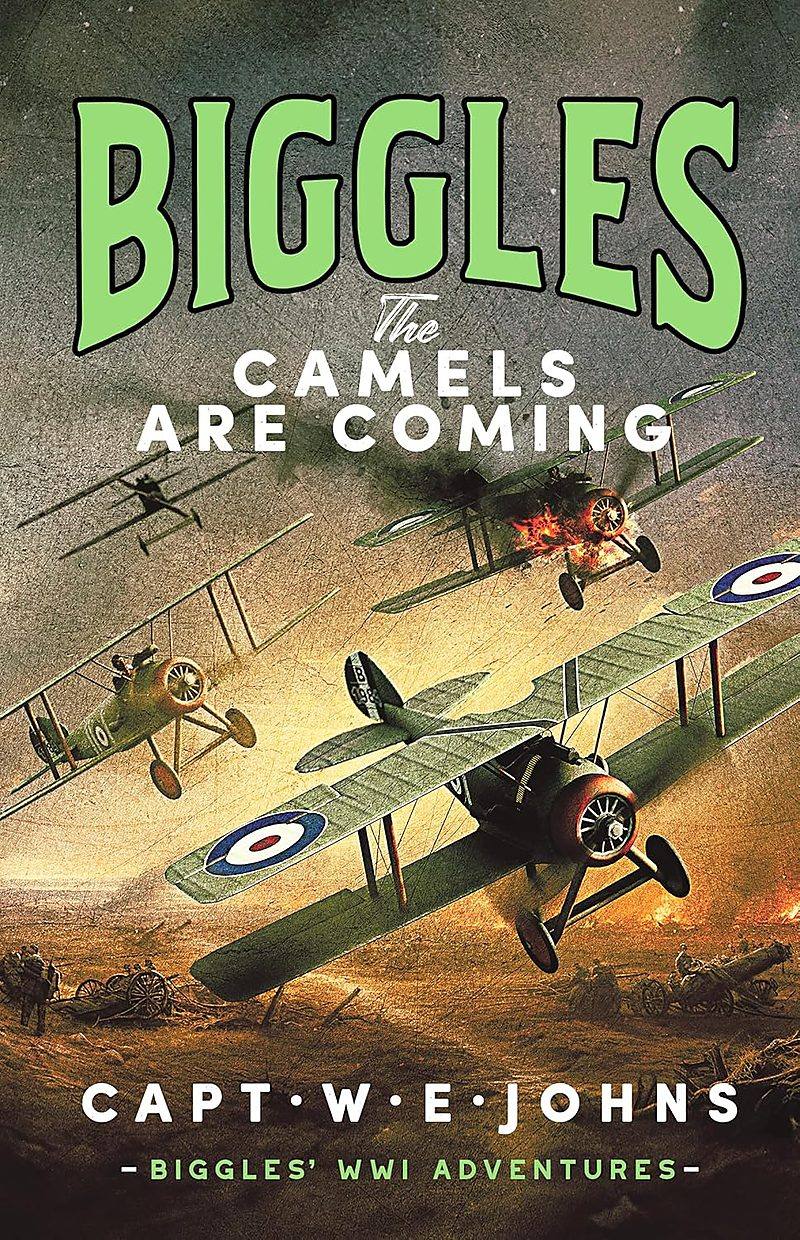
James Bigglesworth, known to the world as Biggles, was created by W. E. Johns, himself a former Royal Flying Corps pilot. When Biggles first appeared in 1932, he was a teenage fighter pilot of 266 Squadron flying the Sopwith Camel over the Western Front, and "The Camels Are Coming" was the title of the very first book.
Across nearly a hundred books, Biggles became the most famous airman in British fiction, translated around the world and devoured by generations of readers, many of whom went on to fly themselves. The early stories carry the authentic detail of a man who had been there: the rotary engine's spray of castor oil, the Camel's vicious right-hand turn, the cold above the trenches. Through Biggles, the Sopwith Camel became as real to readers in 1950s classrooms as it had been to the pilots of 1917.
We do not preserve the Sopwith name because it belongs in a museum.
We preserve it because the values of its founder, craftsmanship, innovation, integrity and quiet British confidence, remain as relevant today as they were in 1912.
Sir Thomas Sopwith did not simply found an aircraft company. He founded a legacy that continued through Hawker and helped shape more than seventy years of British aviation.
Today, those same values continue through the House that proudly bears his name.